Meal Planning for Picky Eaters: Dietary Tags + Family Sharing
Tractable family meal planning when one is gluten-free, one is allergic, and one is six years old — capture preferences, Pick 3, and a kid-approved cookbook.
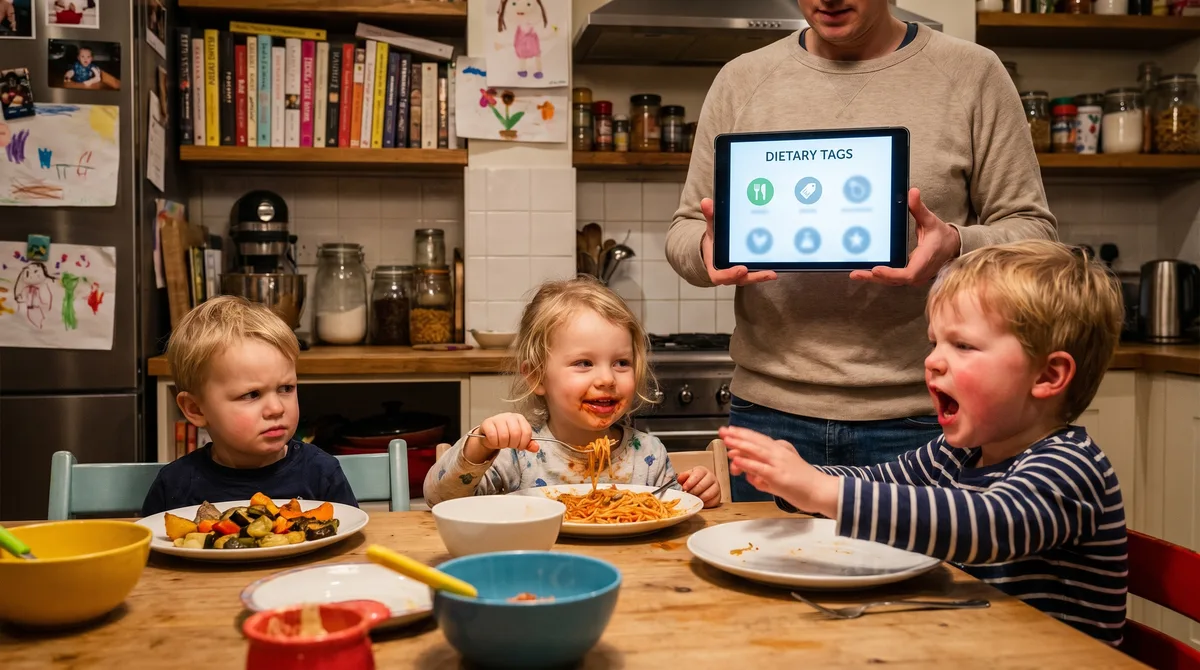
Meal planning is hard. Meal planning for a household where one person is gluten-free, one is vegetarian, one is allergic to tree nuts, and one is six years old and only eats food that's beige — that's a different kind of hard. This is the workflow that makes it tractable.
Capture preferences once
The first move is capturing every family member's dietary preferences and allergens in their profile. Forktastic onboarding asks each user for dietary tags (vegetarian, vegan, gluten-free, dairy-free, halal, kosher, etc.) and allergens (tree nuts, peanuts, shellfish, sesame, etc.). These propagate to the family meal planner and the recipe filter.
Capturing this once means you don't re-litigate it for every meal plan. The app remembers and enforces.
The planner respects the strictest constraint by default
When you're planning in Family mode, the recipe-add interface filters out recipes that violate any member's allergens. Dietary tags (vegetarian, gluten-free) flag rather than hide — sometimes you'll still plan a chicken recipe for the household and the vegetarian member eats the sides plus a substitute protein. The flag reminds you, doesn't forbid.
Allergens are different. The app hard-filters anything that would harm a family member. You can override per-recipe (e.g., a tree-nut recipe planned for an adults-only dinner when the allergic child is at a sleepover) but the default is conservative.
The picky-eater strategy
Picky eaters — small children especially — aren't typically a dietary restriction problem. They're a "this is the third week I've made pasta and you still won't eat it" problem. Forktastic's strategy here is the same as the meal-planning strategy: Pick 3, leave nights open.
On the planned nights, cook one recipe the household will all eat. On open nights, the picky member can have a simple favorite — pasta, quesadilla, peanut-butter sandwich. The plan doesn't fail because one kid didn't eat dinner; the plan was always three meals, not seven.
The kid-tested cookbook
Create a cookbook called "Kid Approved" and add recipes there as you discover the ones your kids will reliably eat. Over months this becomes the rotation you can fall back on when the planned meal doesn't land. The kid-approved cookbook is also the right starting point when a new caretaker (babysitter, grandparent) needs to feed your kids — share the cookbook with them.
The "deconstructed" recipe pattern
For families where one kid will eat the components of a meal but not the meal itself (will eat plain chicken and plain rice but won't eat chicken curry), the trick is to plan recipes where assembly is the last step. Cook chicken curry: kid gets plain chicken and plain rice; adults get curry. One cook, two plates. Forktastic's recipe notes field is the right place to record these family variations.
Where to go next
For the dietary restrictions full guide, dietary restrictions walkthrough. For the Pick 3 method that makes this tractable, Pick 3 method. For the meal planning pillar, meal planning pillar.